
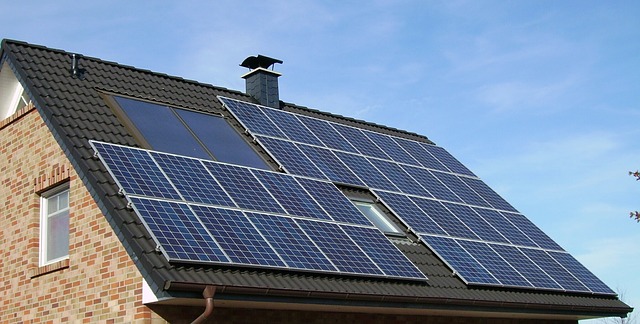
In July 2018 a new micro-generation scheme was launched which would provide grant support towards the purchase and installation of both solar PV and/or battery energy storage.
Below are the salient points of this grant. Full details are available here.
- The maximum grant support levels are as follows: – Solar PV Systems €700/kWp up to a maximum of 4kWp – Battery Storage €1,000
- Check if your home is eligible: https://mgen.seai.ie/
- Once off payment for homeowners to generate energy in a home that is a private residence
- You are not eligible if you received support for a previous solar PV system under another scheme ((e.g Better Energy Communities, Deep Retrofit, Micro-generation Trial)
- Support is available to all homeowners of dwellings built and occupied before 2011
- Equipment purchased or installed prior to July 31st 2018 is not eligible
- Maximum solar PV system size: 4kWp. This however is broken down as follows; up to 2kWp you can use only solar PVs, but between 2kWp and 4kWp you must also incorporate a battery storage system
- NO FEED-IN/GENERATION TARIFF. Generated electricity is meant for ***SELF USE ONLY***
- Minimum battery storage size is 2kWh and must be connected to a minimum 2kWp PV system
- Homeowners must complete a Building Energy Rating (BER) on their home after work has been completed (this cost is assumed to be part of your integration cost)
- Applicant must be prepared to participate in research as may be commissioned by SEAI and its agents
- Applicants must complete ESB form NC6
- Applicants must use registered Solar PV Pilot Scheme Registered contractors
- Electrical work must be completed by a Safe Electric Ireland electrician
- Size of the roof space which can be used must not exceed 12 sq. m or 50 per cent of the total roof area., whichever is lesser
The Good, The Bad & The Ugly
All-in-all this can be seen as a missed opportunity. The facts are that we are going to miss our EU targets for 2020* and it has been acknowledged at government level that we will likely be penalised from 2021 with fines from Europe**.
What I think this scheme brings is more uncertainty, which is the last thing somebody who wants to invest needs. Let me explain; What we have here is a scheme which is “expected” to operate for two years. Using our nearest neighbour – the UK – to get an assessment of how much various rooftop PV systems cost*** we can see that their average cost per kWp (installed) is approximately €2,000. If you want to add a battery system (minimum 2kWh connected to a minimum of 2kWp) you’re going to have to pay a few thousand more – for example Solarwatt’s 2.4kWh offering costs approximately €3,600, while Powervault’s 4.1kWh system costs around €5,000. So if you’re going to pay out such amounts of money, you need to be sure that grant support will be certain and you’re not going to get stung later. Don’t forget too that where an AC connected battery is included in the system, this battery is also considered a microgenerator for ESB Networks purposes and should be included in the NC6 application as an additional generator to the PV generator
So, what are the risks if you are interested in going ahead with a PV/battery system? One risk is that you might miss out on later, and better, support schemes – after all, you cannot apply for this scheme if you have already benefited from any of the previous schemes listed above. Another risk is that Europe might (will) compel our government to implement a tariff solution by means of binding EU Directives and again by availing of this scheme now you may miss out on generous feed-in & self-consumption tariffs later on.
There was an opportunity here to implement a proper feed-in and/or self-generation tariff. Multiple models exist across Europe as templates for how we could have proceeded. The German EEG has been implemented in about 30 countries. Our neighbour, the UK, through hard lessons have now better optimised and implemented a gated (capacity/budget) model. That model could have been optimised even further**** to ensure simple cost control measures kept support levels to minimum levels while ensuring maximum return.
What’s the next step? That is up to you. The support is quite generous and this might be as good as it will ever get. On the other hand, maybe it’s not as good as it ever gets – that’s the problem with poorly devised schemes – you just don’t really know where you stand. It’s a very difficult decision which only you can make based on your current circumstances.
Two final points; planning permission is currently approved for rooftop solar up to 12 square meters. Using one of today’s most powerful home PVs (approx. 400W); the size of this panel is 2.1 square meters. If you stay under 2kWp, you’ll be ok under current planning guidelines, but if you want to go above 2kWp you are into extra costs with fees associated with getting planning permission.
And finally with this scheme, why were appropriate smart meters not mandated by this scheme?
If anybody has implemented a rooftop PV system or battery storage system it would be great to hear from you.
I hear you asking “What about wind turbines?” Well, you can forget that because it has really fallen by the wayside. What’s gone is: (i) a free installation of an import/export meter and (ii) support payment of 10 cent/kWh. Electric Ireland are offering 9.0 cent per kWh to their existing domestic customers until 31st December 2019, but seriously, who would want to invest their hard earned money into something which could end in a few months time?
*https://www.dccae.gov.ie/documents/NREAP%20Fourth%20Progress%20Report.pdf
** https://www.dccae.gov.ie/en-ie/news-and-media/speeches/Pages/Speech-by-Min-Naughten-.aspx
***https://www.gov.uk/government/uploads/system/uploads/attachment_data/file/712389/Cost_data_summary.xlsx
**** Pearse, P., Slade, R. , 2018 Feed-in tariffs for solar microgeneration: Policy evaluation and capacity projections using a realistic agent-based model https://doi.org/10.1016/j.enpol.2018.01.060
